Have you ever heard a song that stuck in your head for days? Maybe it was the catchy hook, the raw emotion in the lyrics, or just the way the chords resolved. That’s not magic. It’s craft. Songwriting is the creative process of composing both music and lyrics to create a cohesive musical piece. While some people believe talent is purely innate, the truth is that great songs are built on fundamental principles that anyone can learn.
You don’t need a degree in music theory to write a hit. You just need to understand how the pieces fit together. Whether you’re strumming an acoustic guitar in your bedroom or producing beats on a laptop, the core mechanics remain the same. Let’s break down exactly what makes a song work, from the initial spark of an idea to the final polished track.
The Blueprint: Understanding Song Structure
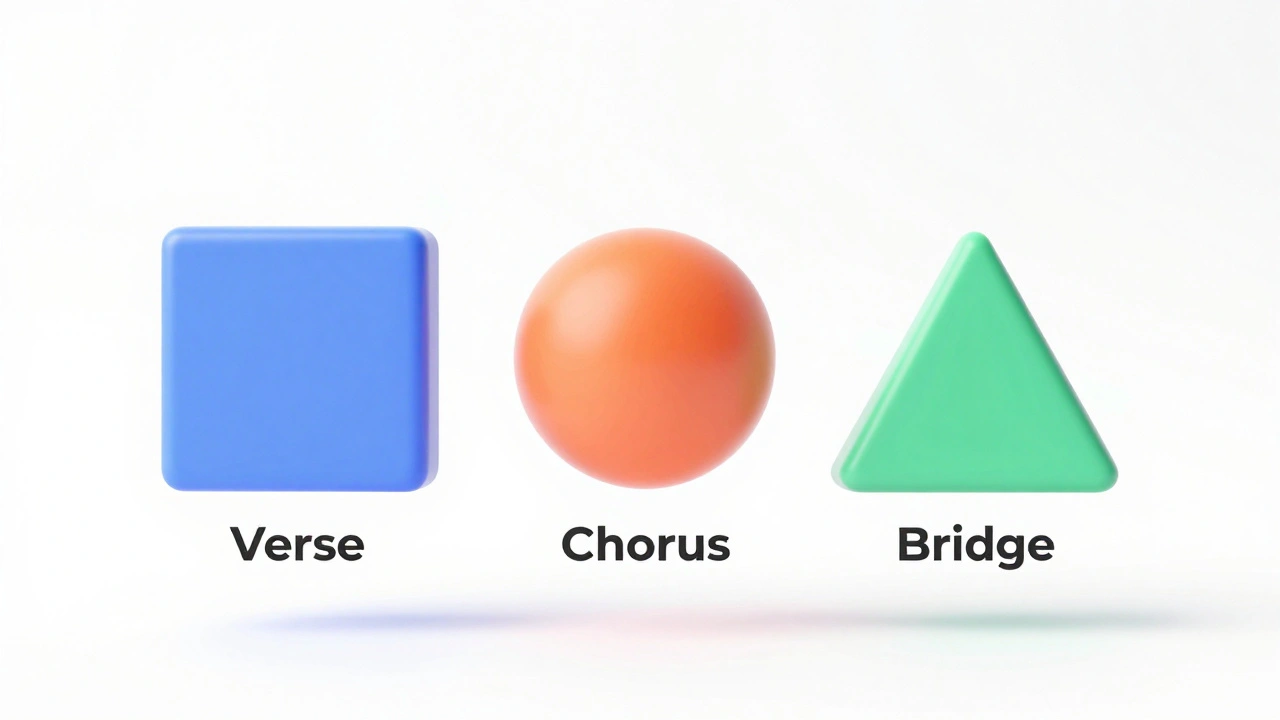
Before you worry about perfect rhymes or complex chord progressions, you need a map. Most successful songs follow a predictable pattern because our brains love familiarity. This pattern is called Song Structure, which refers to the arrangement of sections within a song, such as verses, choruses, and bridges.
The most common structure in modern pop, rock, and country music is Verse-Chorus-Verse-Chorus-Bridge-Chorus. Here is why this works:
- The Verse: This section tells the story. The melody usually stays in a lower range, and the rhythm is more conversational. Think of it as setting the scene. If your song is about a breakup, the verse explains what happened.
- The Chorus: This is the payoff. It contains the main message and the catchiest part of the melody. The energy lifts here, often with higher notes and stronger chords. This is the part people sing along to.
- The Bridge: Also known as the middle eight, this section provides contrast. It breaks the repetition of the verses and choruses, offering a new perspective or musical shift before returning to the final chorus.
If you’re stuck, start with this template. It’s tried and true for a reason. Deviating from it is fine once you understand why it works, but breaking the rules blindly usually results in a confusing listening experience.
Finding Your Melody: The Voice of the Song
A melody is simply a sequence of notes that form a recognizable tune. It’s the part you hum when you forget the words. Writing a strong melody involves balancing two elements: pitch and rhythm.
Many beginners make the mistake of making their melodies too busy. They think more notes equal better music. In reality, simplicity is powerful. Think of "Happy Birthday" or "Twinkle Twinkle Little Star." These melodies are easy to remember because they use stepwise motion (moving to adjacent notes) and repeat motifs.
To write a memorable melody, try these techniques:
- Start with a motif: Pick three or four notes that sound good together. Repeat them, but change the rhythm slightly each time.
- Use contour: A flat line is boring. Make your melody go up and down. Generally, build tension by going higher in the pre-chorus, peak at the top of the chorus, and resolve downward at the end of the phrase.
- Rhythm matters: Sometimes the rhythm of the notes is more important than the pitches themselves. Try speaking your lyrics out loud naturally. The natural stress patterns of speech often reveal the best rhythmic foundation for your melody.
If you’re using a keyboard or guitar, experiment with pentatonic scales. They rarely clash, allowing you to focus on rhythm and phrasing without worrying about hitting a "wrong" note.
Crafting Lyrics That Connect
Lyrics are where many writers get stuck. They want to be poetic, so they obscure the meaning. But the best lyrics are clear and relatable. Lyric Writing is the art of crafting words that convey emotion, tell a story, and fit musically within a song's structure.
Here is the golden rule of lyric writing: Show, don’t tell. Saying "I am sad" is telling. Describing "empty coffee cups and rain against the window" is showing. The listener fills in the emotional gap, which creates a deeper connection.
Rhyme schemes help glue your lyrics together. You don’t need perfect rhymes every time. Slant rhymes (words that sound similar but don’t rhyme perfectly, like "time" and "mine") can sound more sophisticated and less nursery-rhyme-like.
| Scheme | Pattern | Best For |
|---|---|---|
| AABB | First two lines rhyme, next two rhyme | Simple, folk-style verses |
| ABAB | Alternating rhymes | Narrative-driven songs |
| AAAA | Every line rhymes | Choruses or hooks |
| Free Verse | No strict rhyme scheme | Spoken word or experimental styles |
Don’t force a rhyme if it ruins the sentence. Awkward phrasing kills credibility faster than a lack of rhyme. If you can’t find a perfect rhyme, change the word entirely. Focus on the emotion first, then find the rhyme.
Harmony and Chord Progressions
Even if you’re not a trained musician, understanding basic harmony will transform your songwriting. Harmony provides the emotional context for your melody. Chord Progressions are sequences of chords played together to support the melody and establish the tonal center of a song.
In Western music, we primarily use diatonic chords-chords built from the notes of a single key. The most common progression in pop music is I-V-vi-IV (in the key of C Major, that’s C - G - Am - F). Why is it everywhere? Because it resolves tension effectively while keeping things interesting.
Here are a few other progressions to experiment with:
- I - IV - V: Classic blues and rock structure. Simple, driving, and energetic.
- vi - IV - I - V: Often used in ballads. It starts on the minor chord, creating a sense of longing immediately.
- ii - V - I: A jazz staple that provides a smooth, resolving feel. Great for sophisticated pop or R&B.
Don’t just loop one progression forever. Change the chords between the verse and the chorus. If your verse uses major chords, try switching to relative minor chords in the chorus to shift the mood. This harmonic contrast keeps the listener engaged.

The Hook: Making It Stick
A hook is any element in a song that grabs attention and stays there. It doesn’t have to be the chorus. It could be a guitar riff, a vocal ad-lib, or even a specific drum fill. A Hook is a catchy musical or lyrical phrase designed to engage the listener and make the song memorable.
Your hook should appear early in the song. Ideally, within the first 30 seconds. In the streaming era, you don’t have time for long intros. Get to the point fast.
To create a strong hook:
- Repetition: Repeat the phrase multiple times. Repetition breeds familiarity.
- Contrast: Make the hook stand out from the rest of the song. If the verse is sparse, make the hook dense with instrumentation.
- Emotional Peak: Place the hook where the energy is highest. Usually, this is the chorus.
Think of the hook as the headline of your article. If it’s weak, people won’t read the rest. Test your hook by humming it to someone. If they can hum it back after hearing it once, you’ve got something.
Overcoming Writer’s Block
Writer’s block is real, but it’s often just perfectionism in disguise. You’re afraid to write something bad, so you write nothing. The secret is to give yourself permission to write badly. First drafts are supposed to be messy.
If you’re stuck, try these exercises:
- Title-first approach: Find a phrase in a news headline, a book, or a conversation. Use it as your title and write around it.
- Change your instrument: If you always write on guitar, try piano. Different instruments inspire different melodic ideas.
- Collaborate: Work with another writer. Their perspective can unlock ideas you didn’t see.
Remember, quantity leads to quality. Write ten bad songs to get one good one. Keep a notebook or a voice memo app handy. Ideas strike randomly, and if you don’t capture them, they’re gone.
Do I need to know music theory to write songs?
No, you do not need formal music theory training. Many famous songwriters learned by ear. However, understanding basic concepts like keys, scales, and chord functions can help you communicate with musicians and expand your creative options.
What is the best way to start a song?
There is no single best way. Some writers start with a melody, others with lyrics, and some with a chord progression. Experiment with all three approaches to see which feels most natural to you.
How long should a song be?
For radio and streaming platforms, songs between 2:30 and 3:30 minutes are ideal. This length keeps listeners engaged without dragging. However, genre conventions vary; electronic music often runs longer, while punk rock tends to be shorter.
Can I write a song without a chorus?
Yes, though it’s less common in mainstream music. Songs without choruses often rely on repetitive verses or evolving narratives. Folk and alternative genres frequently use non-standard structures.
How do I protect my song from being stolen?
In the US, copyright protection begins the moment you fix your song in a tangible medium (like recording it or writing it down). To strengthen your claim, register your work with the U.S. Copyright Office. Keep dated records of your demos and drafts.