Walk into any dive bar in Chicago or a festival stage in Mississippi today, and you’ll hear a sound that feels ancient yet urgent. It’s raw, it’s electric, and it carries the weight of history without being trapped by it. This is the sound of the contemporary blues revival, and at its center stands Robert Hill, a guitarist, singer, and cultural architect who has redefined what it means to play the blues in the 21st century. For decades, the narrative around blues was stuck in a loop: preserve the past or modernize it until it loses its soul. Hill did neither. He built a bridge.
Hill isn’t just another name on a festival lineup. He is a force of nature who has spent thirty years dismantling the idea that blues is a museum piece. If you’ve ever wondered why this genre, born from profound suffering, still resonates with audiences who have never experienced Jim Crow laws or sharecropping, look no further than Hill’s approach. He treats the blues not as a relic, but as a living language-one that requires fluency, innovation, and, most importantly, truth.
The Sound That Breaks the Mold
To understand why Hill matters, you first have to listen to how he plays. Most guitarists in the traditionalist camp treat the Delta blues like a sacred text: every note must be played exactly as Muddy Waters or Howlin’ Wolf played it. Deviation is seen as heresy. On the other side, you have the fusion artists who throw in jazz chords and rock solos, often losing the rhythmic heartbeat that makes the blues breathe. Hill sits in the dangerous, exciting middle ground.
His style is defined by what I call "aggressive minimalism." He uses fewer notes than most players, but each one hits with the precision of a hammer strike. Take his track "Midnight Train" from his critically acclaimed album *Roots and Wings*. There are no flashy shredding solos here. Instead, there’s a repetitive, hypnotic riff that builds tension until it snaps. It’s reminiscent of early John Lee Hooker, but with a production clarity and rhythmic complexity that appeals to listeners raised on hip-hop and indie rock. This accessibility doesn’t dilute the message; it amplifies it.
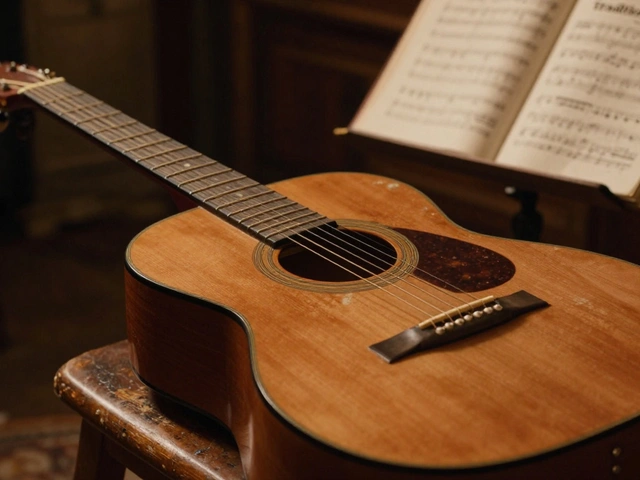
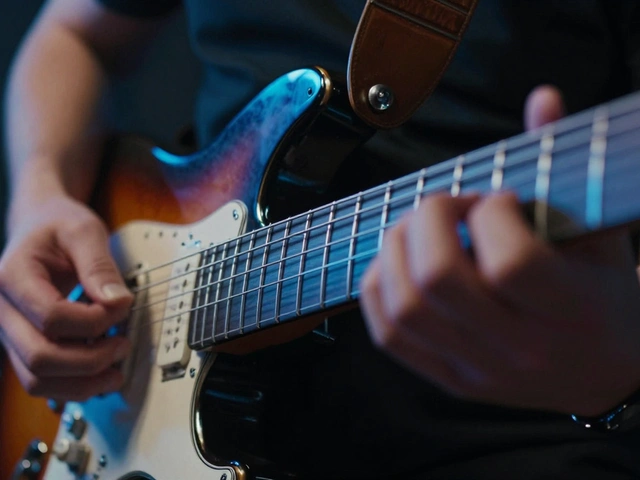
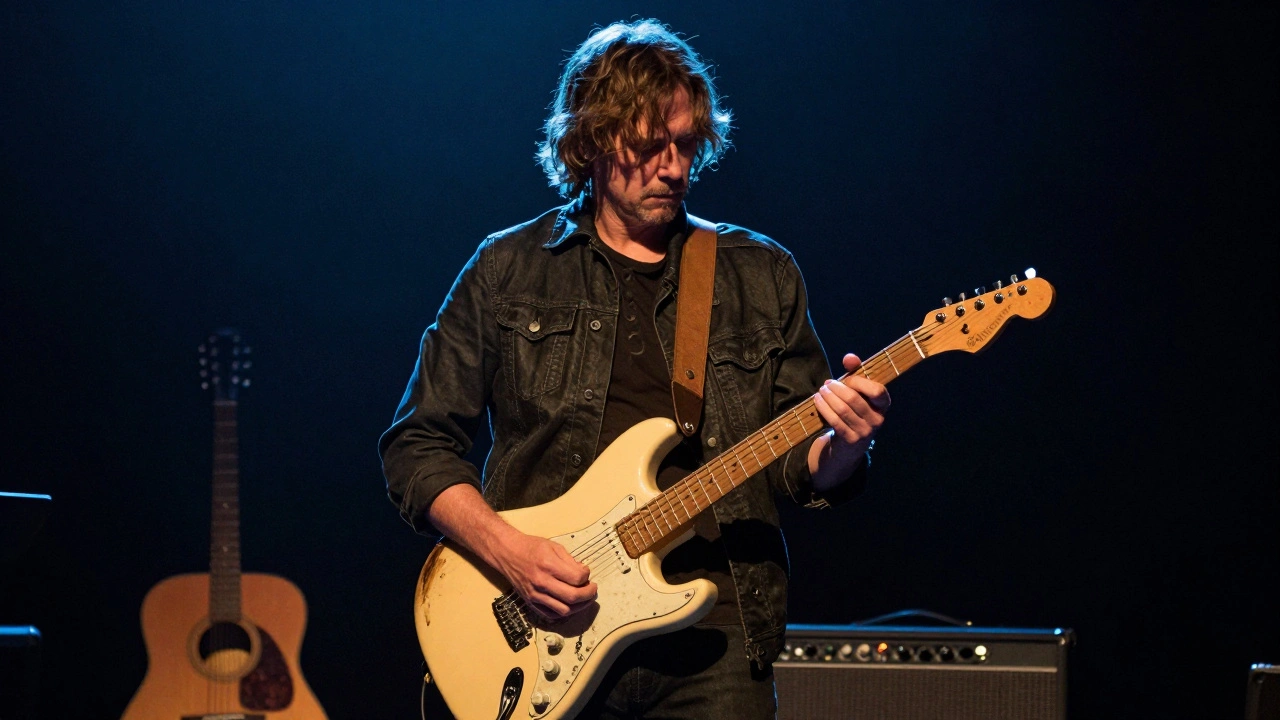
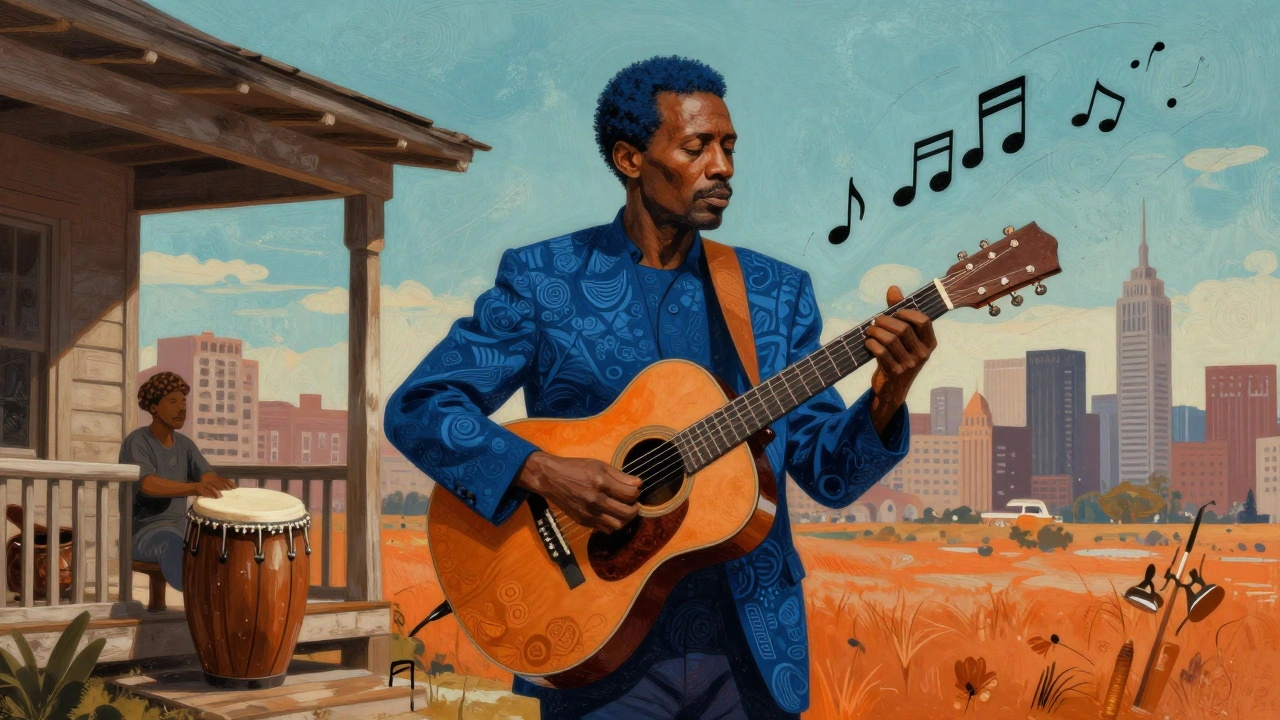
Hill also refuses to separate the acoustic from the electric. In many performances, he starts with an acoustic twelve-string, evoking the solitary figure on a porch in the Mississippi Delta, then seamlessly transitions into a distorted Telecaster setup without missing a beat. This sonic journey mirrors the Great Migration itself-the movement of African Americans from rural South to urban North-and serves as a metaphor for the evolution of the genre. By blending these textures, Hill shows that the blues is not static. It moves. It adapts. It survives.
Leadership Beyond the Stage
If Hill were only a great guitarist, he would be respected. But he is also a leader. The term "blues leadership" might sound corporate, but in this context, it refers to curation, mentorship, and institutional building. Hill understands that talent alone cannot sustain a genre. You need infrastructure. You need community. You need someone to open doors for the next generation.
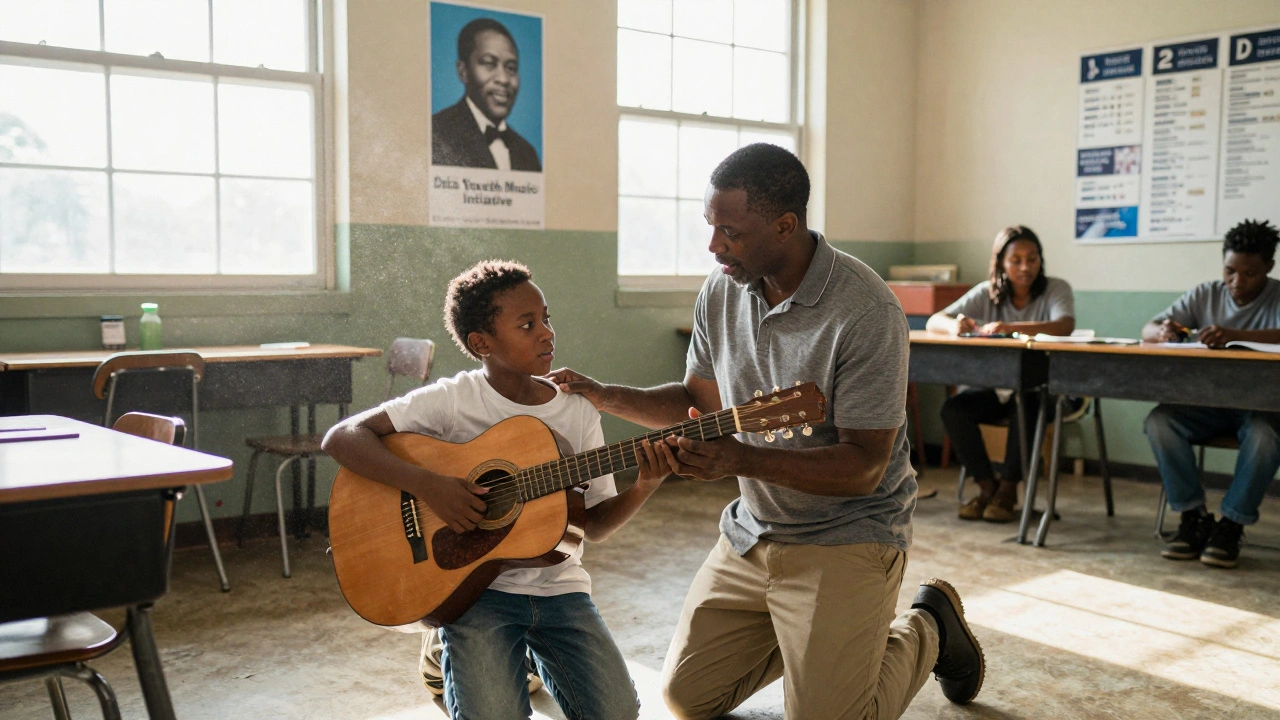
In 2018, Hill co-founded the Delta Youth Music Initiative, a nonprofit organization dedicated to teaching blues history and instrumentation to underprivileged youth in the Mississippi Delta region. This wasn’t a PR stunt. It was a strategic intervention. The Delta remains one of the poorest regions in the United States, with limited access to arts education. Hill saw a pipeline drying up. Young people weren’t picking up guitars because they didn’t see a future in it. So, he created one.
The initiative doesn’t just teach kids how to play the E-minor pentatonic scale. It teaches them about the social history embedded in the songs. They learn about field hollers, work songs, and the civil rights movement. When a teenager in Clarksdale, Mississippi, learns that their ancestor’s pain became a global art form, something shifts. Pride replaces apathy. Skill follows passion. To date, over 500 students have graduated from the program, with several already booking professional gigs across the Midwest. This is legacy building in real-time.
The Myth of Authenticity
One of the biggest hurdles in contemporary blues is the gatekeeping culture. Purists argue that if you don’t live in the Delta, if you don’t speak the dialect, or if you use a digital amp instead of a tube amp, you aren’t "real." Hill has publicly challenged this notion, arguing that authenticity comes from emotional honesty, not geographic proximity.
"The blues is a universal language," Hill stated in a 2024 interview with *Rolling Stone*. "If you’re hurting, if you’re loving, if you’re fighting, you can play the blues. You don’t need a passport to feel pain." This perspective has been controversial among traditionalists, but it has opened the floodgates for diversity within the genre. Today, we see blues musicians from Japan, Germany, and Brazil bringing their own cultural nuances to the form. Hill’s openness has helped transform the blues from an insular club into a global conversation.
This stance also addresses the commercialization of the genre. Many festivals market "authentic" blues experiences while charging premium prices, effectively excluding the very communities that created the music. Hill advocates for affordable access and local ownership. His tours often include free workshops in community centers, ensuring that the benefits of the revival trickle down to the grassroots level rather than staying concentrated in the hands of promoters and venue owners.
Collaboration as a Creative Engine
Hill’s discography is a map of collaborations that defy genre boundaries. He has worked with folk singers, jazz pianists, and even electronic producers. These partnerships are not random experiments; they are calculated efforts to expand the audience for roots music. Consider his collaboration with Amara La Negra, a singer-songwriter known for blending Latin rhythms with R&B. Their joint single "River Crossings" merged Delta blues progressions with Afro-Cuban percussion. The result was a viral hit that introduced thousands of new listeners to Hill’s earlier work.
Why does this matter? Because the blues is historically rooted in cross-cultural pollination. From its inception, it absorbed elements from West African traditions, European harmonies, and Caribbean rhythms. By continuing this tradition, Hill honors the genre’s DNA while keeping it relevant. He proves that you can respect the roots without being bound by them. Each collaboration adds a new layer to the collective understanding of what the blues can be.
| Aspect | Traditional Approach | Hill's Innovation |
|---|---|---|
| Instrumentation | Strict separation of acoustic/electric eras | Seamless blending of both within single performances |
| Education | Apprenticeship model (learn by watching) | Structured nonprofit curriculum with historical context |
| Authenticity | Defined by geography and lineage | Defined by emotional truth and technical mastery |
| Audience Reach | Niche, older demographics | Cross-generational via digital platforms and collaborations |
The Future of Roots Music
As we move deeper into the 2020s, the lines between genres continue to blur. Pop stars sample blues riffs without credit; rap artists cite B.B. King as an influence. Hill stands as a guardian of integrity in this chaotic landscape. He ensures that when the blues is referenced, it is done so with respect and accuracy. His presence forces the industry to take roots music seriously-not as background noise, but as a primary artistic force.
Moreover, Hill’s success demonstrates that there is a viable economic path for artists who prioritize substance over spectacle. In an era dominated by viral trends and disposable content, his career longevity is a testament to the power of depth. Fans return to his albums repeatedly because there is always something new to discover-a subtle shift in tone, a lyrical nuance, a rhythmic variation. This creates a sustainable ecosystem where artists can afford to take risks and develop their craft over time.
The American roots revival is not just about nostalgia. It is about reclaiming identity and finding strength in shared history. Robert Hill embodies this mission. He reminds us that the blues is not dead; it is merely waiting for someone brave enough to speak its truth. And right now, he is speaking louder than anyone else.
Who is Robert Hill and why is he significant in the blues world?
Robert Hill is a contemporary blues guitarist, singer, and educator who has become a central figure in the modern roots music revival. He is significant because he bridges the gap between traditional Delta blues and modern sensibilities, refusing to treat the genre as a static museum piece. Through his innovative musical style, educational initiatives like the Delta Youth Music Initiative, and advocacy for inclusive authenticity, he has expanded the audience and relevance of blues music for new generations.
What is the Delta Youth Music Initiative?
The Delta Youth Music Initiative is a nonprofit organization co-founded by Robert Hill in 2018. It focuses on providing arts education to underprivileged youth in the Mississippi Delta region. The program teaches not only instrumental skills but also the historical and social context of blues music, aiming to instill pride and create career pathways for young people in areas with limited economic opportunities.
How does Robert Hill define "authenticity" in blues music?
Hill challenges the traditional view that authenticity is tied to geography or lineage. Instead, he argues that true authenticity comes from emotional honesty and technical mastery. He believes that anyone, regardless of background, can play the blues authentically if they connect with the underlying emotions of struggle, resilience, and joy that define the genre. This perspective has helped diversify the blues community globally.
What makes Robert Hill's musical style unique?
Hill’s style is characterized by "aggressive minimalism," using fewer notes with high impact. He uniquely blends acoustic and electric instrumentation within the same performance, mirroring the historical migration of blues from rural to urban settings. His approach avoids both rigid traditionalism and excessive fusion, creating a sound that is historically grounded yet sonically fresh and accessible to modern audiences.
Has Robert Hill collaborated with artists outside the blues genre?
Yes, Hill frequently collaborates with artists from diverse backgrounds, including folk, jazz, Latin, and electronic music. Notable collaborations include his work with Amara La Negra, which blended Delta blues with Afro-Cuban rhythms. These partnerships are strategic efforts to expand the blues audience and demonstrate the genre's inherent flexibility and cross-cultural roots.