
Imagine you are three days away from launching a major feature. The code is written, the tests pass, and the marketing team is ready to hit send on the announcement email. Then, a critical bug surfaces in the payment gateway. Or maybe the app store review takes longer than expected. Suddenly, that "ready" status feels like a lie. This is why lead time isn't just a buffer; it is the difference between a smooth rollout and a chaotic scramble.
In modern product development, we often rush. We want to ship fast. But shipping fast without enough runway creates invisible debt. When you compress the timeline, you don't just cut corners; you remove the safety nets that catch mistakes before customers do. A minimum of one month of lead time before your official release date is not about being slow. It is about being strategic. It gives you room to breathe, test, fix, and prepare your ecosystem for the change.
The Hidden Costs of Rushed Releases
When teams try to squeeze a release into two or three weeks, they usually sacrifice quality assurance. Think about the last time you tried to pack for a trip with only an hour to spare. You likely forgot something essential. In software, what gets forgotten is often a regression test, a user acceptance check, or a documentation update. These small omissions compound quickly.
Consider the concept of Regression Testing is a process of re-running tests to ensure that new changes have not broken existing functionality. If you only have ten days before release, you might skip full regression suites to save time. Instead, you run a quick smoke test. That smoke test catches the big fires but misses the smoldering issues. By the time users encounter those hidden bugs, the damage to trust is already done. Fixing a bug post-release costs roughly twice as much as fixing it pre-release, according to industry benchmarks from the Standish Group. So, rushing saves you a week now but costs you two weeks later in hotfixes and support tickets.
What Happens in That First Month?
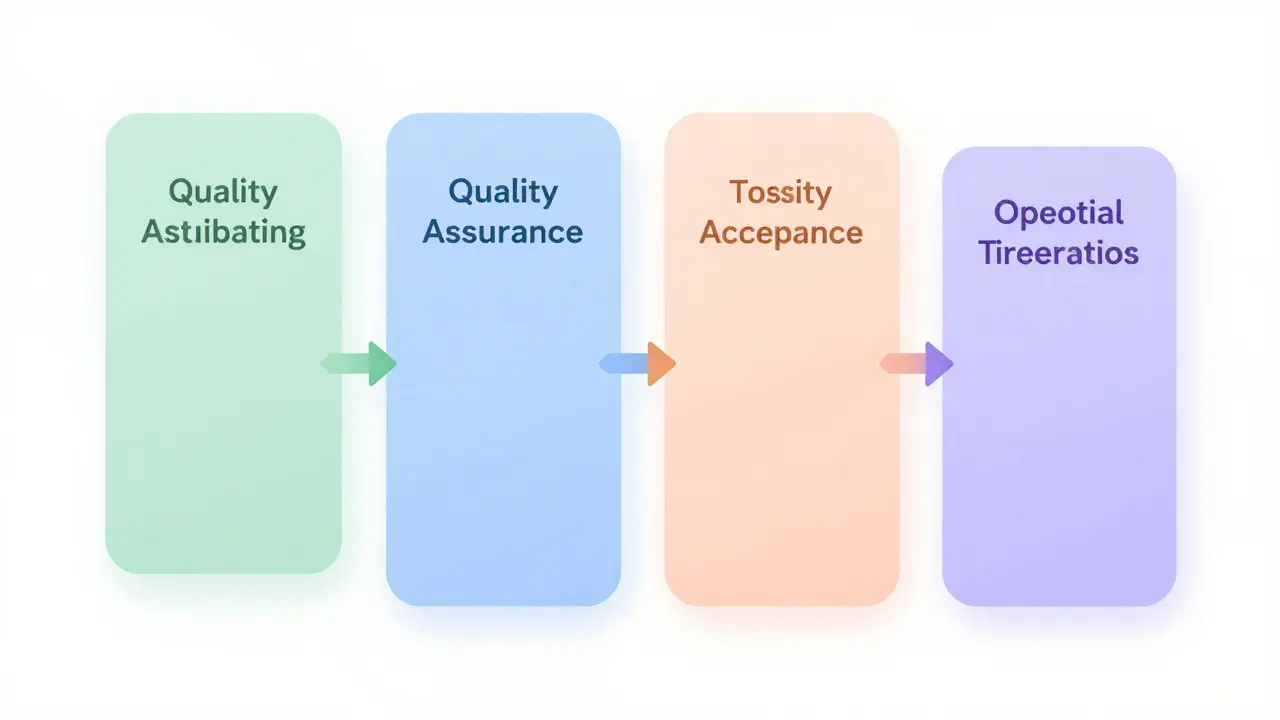
A one-month lead time is not idle time. It is a structured period of preparation. Let’s break down what actually happens during this window when you plan properly.
- Week 1: Code Freeze and Stabilization. No new features go in. Only bug fixes. This allows the core product to settle. Developers can focus on performance tuning and memory leaks rather than adding complexity.
- Week 2: Quality Assurance Deep Dive. QA teams run full test cycles. They test edge cases, different devices, and browser versions. This is where you find the weird, specific bugs that only happen on older iOS versions or specific network conditions.
- Week 3: User Acceptance Testing (UAT). Real users or stakeholders use the product in a controlled environment. They look for usability issues, confusing labels, or workflow bottlenecks that developers missed because they know the system too well.
- Week 4: Marketing and Ops Preparation. Support teams write help articles. Marketing finalizes copy. Sales teams get briefed. Infrastructure teams check server capacity. Everyone aligns their calendars.
If you skip any of these weeks, you are essentially gambling. And in business, gambling with customer experience rarely pays off.
The Role of Cross-Functional Alignment
Product releases are never just about code. They involve multiple departments working in sync. When lead time is short, communication breaks down. The marketing team doesn’t know exactly which features are stable. The support team doesn’t have accurate answers for common questions. The sales team makes promises based on outdated screenshots.
With a month of lead time, you create synchronization points. You can hold weekly sync meetings where engineering reports progress, marketing confirms asset readiness, and operations checks infrastructure. This alignment reduces the "surprise factor." Surprises are expensive. When everyone knows what is coming and when, the release day becomes a celebration rather than a crisis.
Think of Cross-Functional Collaboration as the coordinated effort between different departments such as engineering, marketing, and support to achieve a common goal. Without time, collaboration turns into coordination chaos. With time, it becomes a rhythm. Teams learn each other's cadences. Engineers know when marketers need final assets. Marketers know when engineers will be available for Q&A. This social lubrication is hard to build under pressure.
Risk Management and Contingency Planning
Every release carries risk. Maybe a third-party API changes its schema. Maybe a key developer goes on sick leave. Maybe the app store rejects your build due to a minor guideline violation. These are not hypothetical scenarios; they happen regularly.
Lead time acts as your shock absorber. If the app store rejects your build on Day 25, you still have five days to fix it and resubmit. If you had only a two-week window, that rejection would mean a delay or a rushed, lower-quality resubmission. This buffer allows you to make decisions calmly instead of reacting panic-stricken.
Here is a simple comparison of how risks play out with different lead times:
| Risk Scenario | 2-Week Lead Time | 1-Month Lead Time |
|---|---|---|
| Critical Bug Found Late | High stress, potential delay, skipped tests | Time to fix, re-test, and verify stability |
| App Store Review Delay | Release pushed back significantly | Buffer absorbs delay, release stays on schedule |
| Marketing Asset Revisions | Last-minute changes, low-quality creative | Iterative refinement, polished messaging |
| Support Team Overload | Unprepared staff, high ticket volume | Trained staff, prepared knowledge base |
Notice how the one-month scenario consistently leads to better outcomes. It is not magic; it is physics. More time equals more options. Fewer options equal higher risk.
The Psychological Impact on Teams
We often talk about technical debt, but we forget about human debt. When teams work under extreme time pressure, morale drops. Burnout increases. People start making shortcuts because they feel forced to. They stop asking questions because they are afraid of slowing things down. They hide problems because they fear blame.
A healthy lead time signals respect for the work. It tells the team, "We value quality over speed." This cultural signal matters. It encourages transparency. Developers report bugs early because they know there is time to fix them. Designers iterate on UI details because they aren't racing against a deadline. This psychological safety leads to better products and happier employees.
Conversely, chronic crunch culture drives talent away. Top performers notice when a company consistently rushes releases. They start looking for roles with healthier processes. Retaining good people is cheaper than hiring new ones. So, protecting lead time is also a retention strategy.

How to Implement a One-Month Rule
So, how do you actually enforce this? It starts with planning. When you set your roadmap, build the release date backward. If you want to launch on October 1st, your code freeze should be September 1st. Work backward from there to determine when features need to be complete.
- Define Clear Milestones: Break the month into four distinct phases (Stabilization, QA, UAT, Prep). Assign owners to each phase.
- Communicate Early: Tell stakeholders the release date immediately. Don't wait until the last minute to announce it. Transparency builds trust.
- Protect the Buffer: Treat the last week as sacred. No new scope. No "quick requests." If leadership wants to add a feature, tell them it goes into the next release.
- Document Everything: Keep a release checklist. Check off items as you go. This prevents oversight and provides a record for post-mortems.
It is tempting to skip steps if everything seems fine. But "seeming fine" is dangerous. Trust the process. The month is not wasted time; it is investment time. You are investing in stability, clarity, and confidence.
Frequently Asked Questions
Is one month always necessary for every release?
Not necessarily. For small bug fixes or minor content updates, a shorter lead time might suffice. However, for major feature launches, platform migrations, or significant UX changes, one month is a safe baseline. Assess the complexity of the change. If it touches core systems, err on the side of caution.
What if we miss the one-month mark?
If you miss the mark, reassess the scope. Can you cut features to fit the remaining time? Or should you push the release date by a week or two? Pushing the date is usually better than cutting quality. Communicate the change clearly to all stakeholders to manage expectations.
How does lead time affect marketing efforts?
Marketing needs time to create assets, train sales teams, and warm up audiences. A short lead time forces last-minute campaigns that often lack polish. With a month, marketing can run teaser campaigns, gather feedback, and refine messaging based on early user reactions.
Does this apply to Agile teams?
Yes. Agile is about flexibility, not rushing. Even in Agile, you need a stabilization period before a major release. Sprints can continue, but the final sprint should focus on polishing and testing, not new feature development. The one-month rule complements Agile by providing a predictable release window.
What are the signs that our current lead time is too short?
Look for patterns: frequent hotfixes after release, high volumes of support tickets, team burnout, missed deadlines, or stakeholders complaining about lack of information. If you are constantly firefighting, your lead time is likely insufficient.