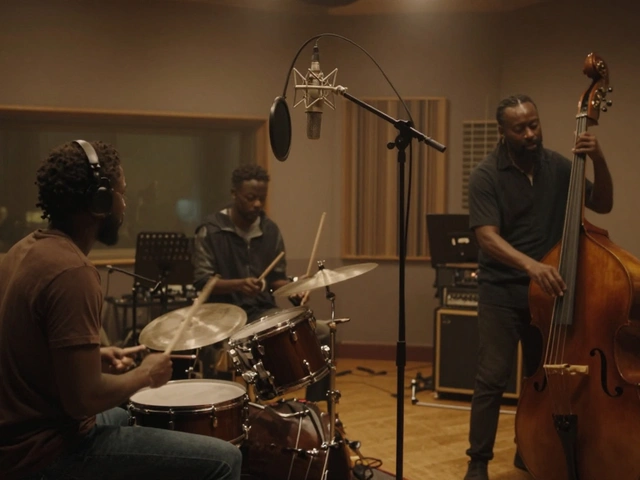
Imagine you just dropped a new track of slow-burning Delta blues. You’ve spent months recording it in your garage studio, mixing the grit of the guitar with the soul of the vocal. Now, the real question hits you: how much money does that song actually make? If you’re an independent blues musician navigating the landscape of streaming economics in 2026, the answer isn't as simple as checking a single dashboard. The revenue per million streams varies wildly depending on where your listeners press play.
The gap between major platforms and niche communities is widening. While global giants like Spotify dominate mindshare, specialized platforms are becoming critical for genre-specific audiences. For blues musicians, who often rely on dedicated, older demographics and deep cuts rather than viral pop hooks, understanding the specific yield of each platform is vital for financial survival. This isn't just about vanity metrics; it’s about whether your art pays the rent.
The Baseline: What a Stream Actually Pays
Before we dive into the specifics of YouTube Music and SoundCloud, we need to establish what "per stream" means in the current digital audio ecosystem. A stream is generally counted when a listener plays a track for at least 30 seconds. However, the royalty pool from which these payments are drawn is not static. It fluctuates based on total user growth, advertising revenue, and subscription fees.
In 2026, the average effective royalty rate across all major platforms hovers around $0.004 to $0.005 per stream. But this average is misleading for niche genres. Major labels negotiate better rates through direct deals, while independent artists often receive a smaller slice unless they use specific distribution partners. For a blues artist releasing independently, the reality is often closer to the lower end of that spectrum on generalist platforms, making specialized channels more attractive.
YouTube Music: The Ad-Supported Giant
YouTube Music is a streaming service integrated with the world's largest video platform, offering both ad-supported and premium subscription tiers. Its unique position allows it to tap into two distinct revenue streams: ad revenue from free users and subscription fees from premium members. Because YouTube has such massive inventory, the cost per impression (CPM) can be high, but so is the competition for listener attention.
For a blues musician, YouTube Music offers a complex payout structure. If a listener is on the free, ad-supported tier, the artist typically receives a share of the ad revenue. In 2026, data suggests that a million streams on the ad-supported tier might yield between $1,200 and $1,800, depending on the region and viewer engagement. However, if those same streams come from Premium subscribers, the payout aligns more closely with standard streaming rates, roughly $3,000 to $4,000 per million streams.
The catch? YouTube Music requires a partnership with a distributor or a direct deal with YouTube Content ID. Many blues artists use distributors like DistroKid or TuneCore, which take a cut of the royalties. After deducting the distributor’s fee (often 10-20%) and any label splits, the net income drops significantly. Yet, the visual component remains a powerful tool. A live performance video accompanying the track can drive higher engagement, potentially boosting the algorithmic push and increasing the number of streams beyond what audio-only platforms achieve.
SoundCloud: The Community-Driven Niche
SoundCloud is an online audio distribution platform known for its focus on independent artists, remixes, and community interaction. Unlike YouTube, SoundCloud has historically relied less on mass-market subscriptions and more on a hybrid model involving fan-powered royalties and brand partnerships. In recent years, SoundCloud has refined its "Fan-Powered Royalties" system, which allocates revenue based on how much individual listeners contribute to an artist's popularity, rather than splitting the pot equally among all streams.
This model is particularly advantageous for blues musicians with a loyal, albeit smaller, fanbase. If your core audience listens to your entire catalog repeatedly, Fan-Powered Royalties can significantly boost your earnings compared to a flat-rate model. Estimates for 2026 suggest that a million streams on SoundCloud can generate anywhere from $1,500 to $2,500 for an independent artist, provided the listener base is engaged and located in high-value markets like the US, UK, or Germany.
However, SoundCloud also relies heavily on the "Pro" subscription tier. Non-Pro users have limited upload capabilities and may face lower visibility. For serious blues artists, upgrading to SoundCloud Pro is almost mandatory to access full analytics and ensure consistent royalty accrual. The platform’s strength lies in discovery within the indie and underground scenes. A blues track shared by a respected DJ or featured in a curated playlist can gain traction faster here than on broader platforms, though the absolute ceiling for monthly streams is lower.

Direct Comparison: Earnings Per Million Streams
To make the decision clearer, let’s look at the projected net earnings for an independent blues artist after typical distributor fees. These figures assume a mix of free and paid listeners, typical of 2026 market conditions.
| Platform | Primary Revenue Source | Gross Estimate ($) | Net Estimate ($)* | Key Advantage |
|---|---|---|---|---|
| YouTube Music (Ad-Supported) | Advertising CPMs | $1,200 - $1,800 | $900 - $1,400 | Viral potential via video |
| YouTube Music (Premium) | Subscription Fees | $3,000 - $4,000 | $2,400 - $3,200 | Higher per-stream value |
| SoundCloud (Fan-Powered) | Fan Contributions + Ads | $1,500 - $2,500 | $1,200 - $2,000 | Loyal fan monetization |
| Spotify (Reference) | Subscription Fees | $3,000 - $4,500 | $2,700 - $4,000 | Highest volume potential |
*Net estimates assume a 15-20% deduction for distribution services and no label splits.
Strategic Implications for Blues Musicians
The data reveals a clear trade-off. YouTube Music offers higher ceilings due to its vast user base, but the variance is high. A track that doesn’t get pushed by the algorithm might stagnate with low ad revenue. Conversely, a viral moment can skyrocket earnings. SoundCloud offers a more stable, community-driven income stream. If you have 10,000 dedicated fans who listen to your album every month, SoundCloud’s Fan-Powered Royalties will likely outperform YouTube’s ad-supported tier for those specific users.
For a blues musician, the strategy shouldn't be "pick one." It should be a layered approach. Use YouTube Music to capture casual listeners and leverage the visual aspect of live performances. Simultaneously, cultivate your core fanbase on SoundCloud, encouraging them to follow and engage deeply. This dual-platform presence maximizes both reach and depth. Additionally, consider the demographic fit. Blues listeners tend to be older and more loyal, traits that align well with SoundCloud’s community ethos, whereas younger, casual listeners might gravitate toward YouTube’s interface.

Beyond the Platforms: Diversifying Income
Relying solely on streaming payouts is risky, even with optimized strategies. In 2026, successful independent artists treat streaming as marketing, not just revenue. The true money for many blues musicians comes from sync licensing, merchandise, and touring. A strong presence on YouTube Music can lead to sync opportunities, as film and TV producers often search for mood-based audio there. Similarly, a robust SoundCloud profile serves as a professional portfolio for booking agents and festival curators looking for authentic, niche acts.
Furthermore, direct-to-fan platforms like Patreon or Bandcamp complement these efforts. By funneling traffic from YouTube and SoundCloud to a mailing list or membership site, artists can bypass the middleman entirely for a portion of their audience. This hybrid model ensures that while you earn pennies per stream, you also build assets that appreciate over time-your email list and your physical community.
Common Pitfalls to Avoid
Many artists make the mistake of focusing only on raw stream counts. A million streams on an ad-heavy platform might pay less than 100,000 streams on a high-engagement niche platform. Always check your effective rate per stream, not just the total count. Another pitfall is ignoring metadata. Properly tagging your tracks with specific sub-genres (e.g., "Chicago Blues," "Delta Blues") helps algorithms place your music with the right listeners, increasing the likelihood of repeat plays and higher royalty yields.
Finally, don’t neglect the legal side. Ensure your master recordings are properly registered with PROs (Performance Rights Organizations) like ASCAP or BMI. Streaming platforms pay mechanical royalties to publishers and performance royalties to performers. If you aren’t registered, you might be leaving money on the table that goes to unclaimed funds or other rights holders.
Frequently Asked Questions
Which platform pays more per stream for independent blues artists?
It depends on the listener type. YouTube Music Premium streams pay more per unit than SoundCloud streams, but SoundCloud’s Fan-Powered Royalties can yield higher totals if you have a small, highly engaged fanbase. For broad reach, YouTube tends to offer higher gross potential due to volume.
Do I need a distributor to get on YouTube Music?
Yes, for most independent artists. You typically need to partner with a digital distributor like DistroKid, CD Baby, or TuneCore to deliver your audio files and metadata to YouTube Music. Some large catalogs may sign direct deals, but this is rare for solo blues musicians.
How does SoundCloud’s Fan-Powered Royalty work exactly?
Instead of splitting revenue equally among all streams, SoundCloud calculates how much each listener contributes to an artist’s overall popularity. Listeners who play your music frequently and exclusively help you earn a larger share of the revenue pool allocated to that specific time slot or playlist.
Is it worth uploading live videos to YouTube Music?
Absolutely. Video content increases watch time and engagement metrics, which can trigger algorithmic recommendations. For blues, where authenticity and performance style matter, a high-quality live video can convert casual viewers into loyal subscribers, boosting both ad revenue and premium conversion rates.
What is the best strategy for maximizing income from streaming in 2026?
Use a multi-platform approach. Distribute to all major platforms to capture maximum reach. Use YouTube for visual marketing and broad discovery, SoundCloud for deepening fan loyalty, and direct-to-fan tools for monetizing your core audience. Treat streaming as a customer acquisition channel, not just a sales terminal.