Blind Willie Johnson didn’t just play the blues-he turned pain into prayer. Born in 1897 in Texas, he lost his sight as a child, but what he lost in vision, he gained in sound. With a steel slide on his finger and a voice like gravel wrapped in velvet, he turned hymns into haunting laments and spirituals into soul-shaking anthems. His 1927 recording of Dark Was the Night, Cold Was the Ground wasn’t meant to be a hit. It was meant to be a cry. And yet, decades later, that same song traveled to space aboard the Voyager Golden Record, carried by humanity’s most ambitious message: We were here.
How Gospel Blues Was Born
Gospel blues isn’t just church music with a backbeat. It’s the sound of people who had no other way to speak. In the early 1900s, Black communities in the American South lived under Jim Crow, poverty, and constant fear. Churches were safe spaces, but even there, the music had to carry more than praise-it had to carry survival. That’s where gospel blues came in: a fusion of spiritual lyrics with the raw, aching structure of the blues.
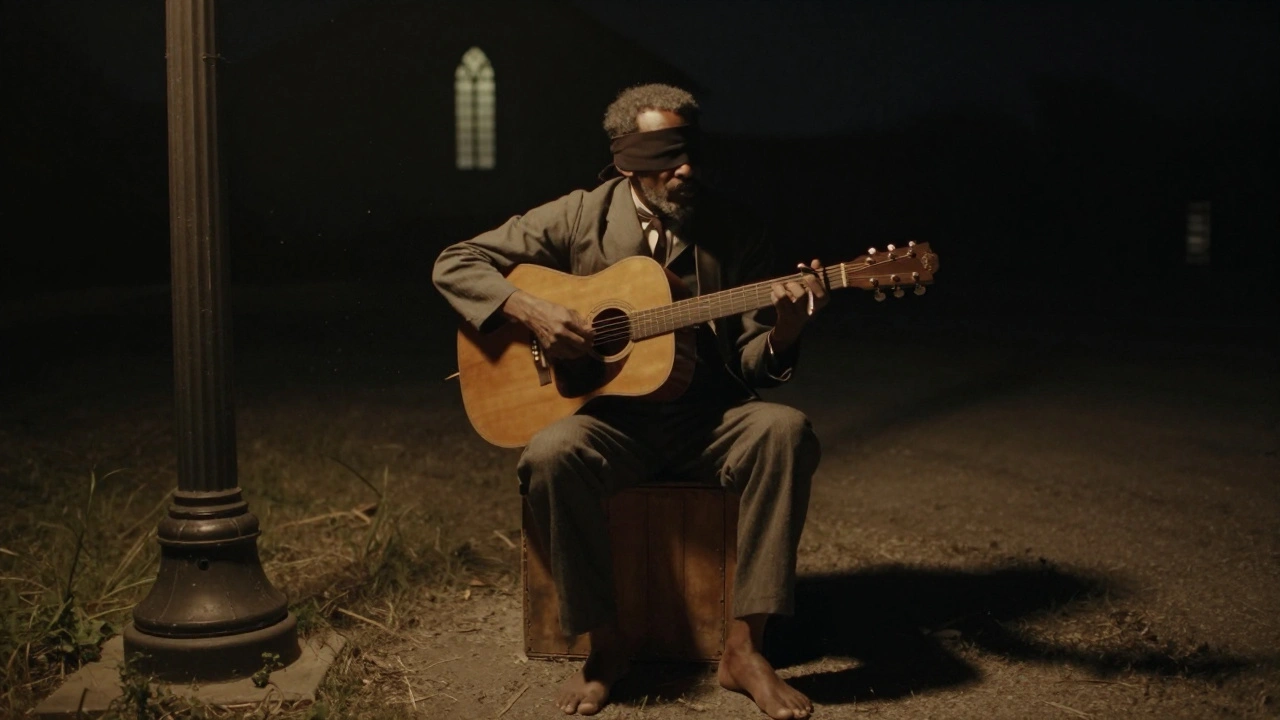
Blind Willie Johnson didn’t have a band. He had his voice and his guitar. He used a pocketknife as a slide, dragging it across the strings until the notes bent like a sob. His songs didn’t follow verse-chorus rules. They moved like sermons-building, pausing, breaking. Take My Hand, Precious Lord wasn’t a song you danced to. It was one you clutched to your chest while your child slept in a cold room.
He recorded 30 tracks between 1927 and 1930. Most were released on 78 rpm records that sold for 75 cents. No one knew his real name for years. He was just “Blind Willie”-a man who walked barefoot through the streets of Beaumont, singing for spare change, and then disappearing into the shadows.
Robert Hill: The Bridge Between Eras
Fast forward to the 1970s. Robert Hill, a young guitarist from North Carolina, was raised on Pentecostal hymns and his grandfather’s old records. One night, he found a warped copy of Johnson’s Jesus Is My Chiefest Friend at a flea market. The needle skipped. The voice cracked. But something in it didn’t break-it pulled.
Hill didn’t just cover Johnson’s songs. He reimagined them. Where Johnson’s voice was a thunderclap, Hill’s was a whisper that still shook the room. He kept the slide guitar, but added subtle fingerpicking patterns learned from folk revivalists. He didn’t sing like a preacher. He sang like someone who’d been to hell and came back to tell you how to avoid it.
By 1983, Hill had released Slippery When Wet, an album that blended Johnson’s spirituals with modern blues phrasing. Critics called it “a ghost in a denim jacket.” But fans knew better. It was the sound of a tradition not lost, but carried forward.
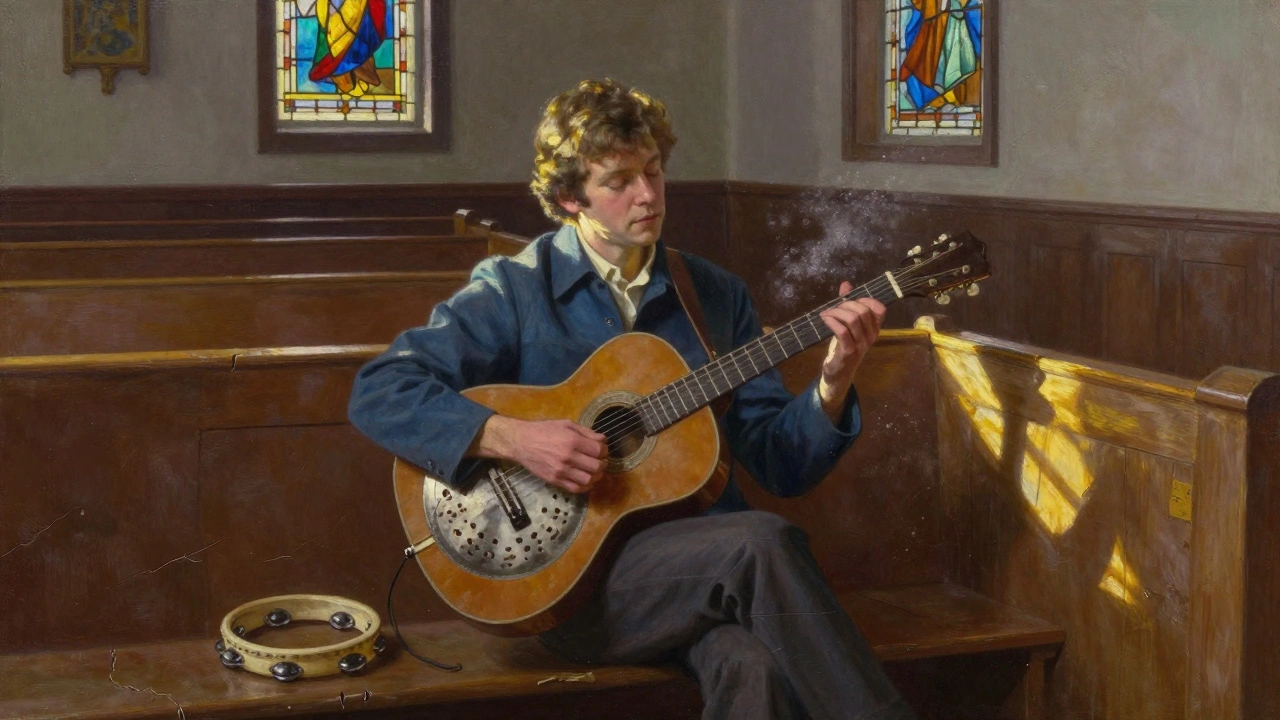
The Slide Guitar: A Voice Without Words
The slide guitar is the secret weapon of gospel blues. It’s not just an instrument-it’s a second voice. Blind Willie Johnson didn’t use a metal bar like later players. He used whatever he had: a pocketknife, a bottleneck, even a piece of glass. Each slide left a mark-not just on the strings, but on the listener.
That bending tone? It’s the sound of a person trying to speak through tears. It doesn’t say “I’m sad.” It says, “I’ve lost everything, and I’m still singing.”
Robert Hill studied Johnson’s recordings note by note. He noticed how Johnson would let a note hang, then drop into silence. No drum. No bass. Just that slide, trembling, like a heartbeat after a long run. Hill started recording live in empty churches, letting the reverb do the work. He called it “holy acoustics.”
Modern players like Gary Clark Jr. and Fantastic Negrito cite Johnson’s slide technique as foundational. But Hill was the first to show how it could evolve without losing its soul.
Why This Legacy Matters Today
Today, gospel blues is often reduced to a nostalgic footnote. Streaming playlists label it “old-time spirituals” or “roots music.” But that’s not what it was. It was protest music before protest music had a name. It was therapy before therapy had a price tag. It was the only thing that could hold grief without breaking.
When you listen to Blind Willie Johnson’s If I Had My Way, you hear a man begging for peace-not from God, but from the world. When Robert Hill covered it in 2005 with a muted electric tone and a single tambourine, he didn’t modernize it. He made it urgent again.
That’s the legacy: not preservation, but persistence.

How to Hear the Sound for Yourself
Start with Blind Willie Johnson’s 1927-1930 recordings. Look for the Columbia and Paramount releases. The best versions are the remastered ones from 2012-cleaner, but still raw. Don’t listen on earbuds. Play it on a single speaker. Sit in silence. Let the slide do its work.
Then find Robert Hill’s Slippery When Wet (1983) and When the Spirit Moves (2007). Notice how he keeps the same lyrics but changes the rhythm. He doesn’t speed up. He slows down. He lets the silence breathe.
Try this: play Johnson’s Let Your Light Shine on Me followed by Hill’s version. The difference isn’t in the notes. It’s in the pause after the last word. Johnson’s pause is a prayer. Hill’s is a question.
What You’re Really Listening For
People say gospel blues is about faith. But it’s really about endurance. It’s what happens when you have nothing left to lose-and still choose to sing.
Blind Willie Johnson died in 1945, locked in a house with no heat. His body wasn’t found for days. No one knew he was gone until the neighbors smelled the smoke. He left behind no money. No will. Just 30 songs.
Robert Hill died in 2019. His last public performance was at a community center in Durham. He played Dark Was the Night on a 1930s National resonator. Afterward, a teenage girl asked him, “Why does it hurt so much to listen?”
He didn’t answer right away. Then he said: “Because it’s not supposed to be pretty. It’s supposed to be true.”
That’s the legacy. Not the notes. Not the guitars. Not even the names. It’s the truth that still sings, even when no one’s left to hear it.
Who was Blind Willie Johnson?
Blind Willie Johnson was an American gospel blues singer and slide guitarist born in 1897 in Texas. He recorded 30 songs between 1927 and 1930 using a steel slide and a powerful, gravelly voice. He was blind from childhood and lived in poverty, often performing on street corners. His most famous song, "Dark Was the Night, Cold Was the Ground," was included on the Voyager Golden Record sent into space in 1977. He died in 1945 under mysterious circumstances and was largely forgotten until a revival of interest in the 1960s.
What is gospel blues?
Gospel blues is a musical style that blends the lyrical themes of Christian hymns with the emotional structure and instrumentation of the blues. It often features slide guitar, call-and-response vocals, and lyrics about suffering, salvation, and divine intervention. Unlike traditional gospel, gospel blues doesn’t shy away from pain-it uses the blues to express it. Artists like Blind Willie Johnson and Robert Hill helped define the genre by making sacred songs feel deeply human.
How did Robert Hill continue Blind Willie Johnson’s legacy?
Robert Hill revived Johnson’s music by reinterpreting it with modern blues techniques while preserving its emotional core. He used Johnson’s slide guitar style but added subtle fingerpicking and live church acoustics to create a more intimate, reflective sound. Hill’s 1983 album Slippery When Wet and 2007 release When the Spirit Moves introduced Johnson’s songs to new audiences, showing that gospel blues could evolve without losing its spiritual weight.
Why is the slide guitar so important in gospel blues?
The slide guitar in gospel blues acts like a second voice-one that can cry, moan, and sigh without words. Blind Willie Johnson used a pocketknife or glass slide to bend notes in ways that mimicked human vocalizations. This technique made his songs feel like prayers spoken aloud. Robert Hill preserved this approach, showing that the slide isn’t just a tool-it’s a way of turning pain into something that can be shared, not just felt.
Where can I find authentic recordings of Blind Willie Johnson?
The best authentic recordings of Blind Willie Johnson are the remastered Columbia and Paramount 78 rpm transfers from the 1927-1930 sessions. Look for the 2012 compilation Blind Willie Johnson: The Complete Recordings, released by Document Records. These versions preserve the original crackle and tone without over-processing, letting you hear the raw emotion of his voice and slide. Streaming services often have lower-quality versions, so physical or high-res digital copies are recommended.