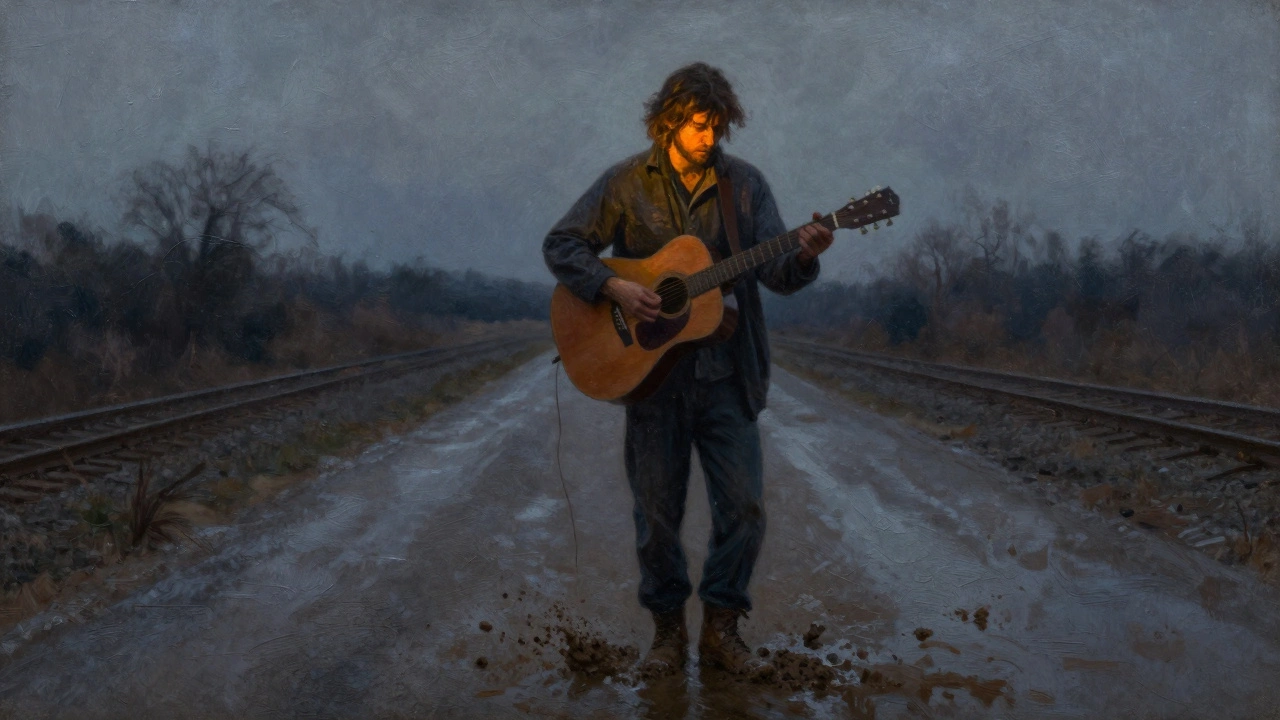
Ever tried to write a song that feels like it has weight? You know the kind-where the words don’t just sit on top of the melody but dig into the dirt? That’s the power of gospel blues. It’s not just about singing sad notes; it’s about painting a picture so vivid the listener can smell the rain or feel the gravel under their feet. When we look at how artists like Robert Hill is a singer-songwriter known for blending traditional gospel themes with gritty blues storytelling. His work demonstrates how specific imagery transforms simple complaints into universal anthems of struggle and hope. handle this, you realize that great lyrics are built on two pillars: metaphor and imagery.
If you’re sitting down to write your next track, you might be staring at a blank page wondering why your lines feel flat. The secret isn’t using bigger words. It’s using sharper pictures. In this guide, we’ll break down exactly how to borrow techniques from the gospel blues tradition to make your songwriting hit harder. We aren't just talking theory here; we're talking about tools you can use in your next writing session.
The Gritty Reality of Gospel Blues Imagery
Imagery is simply language that appeals to the senses. But in gospel blues, it’s rarely pretty. It’s raw. Think about the difference between saying "I’m tired" and saying "My bones feel like lead after a twelve-hour shift." The first tells you a fact. The second makes you feel the exhaustion. Gospel Blues is a musical genre combining the spiritual messages of gospel music with the rhythmic and melodic structures of the blues. This fusion requires lyrics that bridge the gap between earthly suffering and heavenly relief.
When you write, ask yourself: What does this emotion look like? If you’re writing about heartbreak, don’t just say you’re sad. Describe the cold coffee sitting on the counter because you forgot to drink it. Describe the silence in the room that sounds like ringing in your ears. Robert Hill’s approach often involves grounding spiritual concepts in physical reality. He doesn’t just talk about faith; he talks about the road, the dust, the train tracks. These are tangible things. Your listeners connect with tangible things.
- Sight: Use colors and lighting. Is the sky gray like old ash? Is the light flickering like a dying bulb?
- Sound: Don’t just describe noise. Describe texture. Is the wind howling or whispering? Is the church bell heavy or sharp?
- Touch: Temperature and texture matter. Cold steel, rough wood, sticky sweat. These sensations trigger memory.
- Smell/Taste: These are the most powerful sensory triggers. The smell of ozone before a storm, the taste of bitter pills.
Avoid generic adjectives like "nice," "bad," or "good." They tell the brain nothing. Instead, use nouns and verbs that carry weight. Replace "It was a hard day" with "The sun beat down until the pavement cracked." See the difference? One is a report. The other is an experience.
Weaving Metaphors That Stick
Metaphor is when you say one thing is another thing to highlight a shared quality. A simile compares things using "like" or "as," which is fine, but a metaphor is stronger because it creates a direct identity. In gospel blues, metaphors often link the physical world to the spiritual world. The "cross" isn’t just wood; it’s burden. The "river" isn’t just water; it’s time or death or baptism.
To write effective metaphors, you need to find unexpected connections. If you’re writing about anxiety, comparing it to a "heavy stone" is cliché. Everyone has used that. Try comparing it to a "phone ringing in an empty house." It suggests anticipation, intrusion, and isolation all at once. Look at how Hill uses nature. Rain isn’t just weather; it’s cleansing or drowning. Fire isn’t just heat; it’s purification or destruction.
| Emotion/Concept | Cliché (Avoid) | Fresh Metaphor (Try) |
|---|---|---|
| Sadness | Heart of stone | A hollow chest cavity where the wind whistles through |
| Hope | Light at the end of the tunnel | A single green shoot cracking through concrete |
| Anger | Burning hot | A pressure cooker valve screaming for release |
| Faith | Believing in God | Walking blindfolded over a cliff edge |
The key to a good metaphor is consistency. If you start describing your problem as a storm, don’t suddenly switch to describing it as a fire unless there’s a clear reason. Stick to the image. Let it develop. In a verse, you might introduce the storm. In the chorus, the rain starts falling. In the bridge, the floodwaters rise. This narrative arc within the imagery keeps the listener engaged.

Structuring the Spiritual Journey
Gospel blues songs often follow a specific emotional trajectory. They start in the mud-the struggle, the sin, the pain-and they move toward redemption or acceptance. Your lyrics should reflect this movement. Even if you aren’t writing a religious song, the structure works for any story of overcoming odds.
Start with the concrete problem. Verse 1 should establish the setting and the conflict using strong imagery. Who is hurting? Where are they? What do they see? Then, in the chorus, broaden the scope. Move from the specific incident to the general feeling. This is where your main metaphor shines. If your metaphor is a journey, the chorus is the map. The bridge is where things get complicated or intense. Maybe the path gets blocked. Maybe the weather turns. Finally, the outro or final verse offers resolution-or at least a decision to keep moving.
Don’t rush the resolution. In real life, problems don’t vanish instantly. In gospel blues, the redemption is often earned through endurance. Show the weariness. Show the doubt. This makes the eventual hope feel earned rather than cheap. If you jump straight from sadness to happiness, it feels fake. If you show the slow climb out of the hole, it feels true.
Voice and Dialect in Modern Contexts
One tricky part of writing in this style is voice. You want authenticity without caricature. Historically, blues and gospel were rooted in specific dialects and regional speech patterns. Today, you don’t need to fake an accent to write authentic lyrics. Focus on rhythm and syntax instead. Short, punchy sentences can convey urgency. Longer, flowing lines can convey reflection.
Listen to how people actually speak when they are emotional. They don’t use perfect grammar. They repeat themselves. They interrupt their own thoughts. They use fragments. "I tried. I really tried. But the door stayed shut." That repetition adds emphasis. It mimics the way our minds loop on painful memories. Incorporate these natural speech patterns into your lyrics. It makes them sound human, not written.
Also, consider the musicality of the words. Blues relies heavily on rhythm. Count the syllables. Feel the stress on certain beats. If a line is clunky to sing, it will sound clunky to listen to. Read your lyrics aloud. If you stumble over a phrase, rewrite it. Simplicity is key. Sometimes the most powerful line is just three words: "Let me go."

Practical Exercises for Better Lyrics
You can’t learn this by reading alone. You have to practice. Here are three exercises to sharpen your metaphor and imagery skills:
- The Object Game: Pick an object in your room. Describe it without naming it. Use only sensory details. Now, assign an emotion to that object. How does a broken clock represent lost time? How does a wilting plant represent neglect? Write a four-line stanza based on this connection.
- The Synonym Swap: Take a lyric you’ve already written. Circle every adjective and adverb. Replace them with nouns and verbs. Change "He walked slowly" to "He dragged his feet." Change "She was very angry" to "Her fists clenched tight." Notice how the action becomes more visible.
- The Sensory Map: Draw a circle. In the center, write your song’s theme (e.g., Betrayal). Around it, draw five smaller circles for Sight, Sound, Smell, Touch, Taste. Fill each with three specific images related to betrayal. Choose the strongest one for your chorus.
These drills force your brain to stop relying on abstract concepts and start looking at the physical world. Over time, this becomes automatic. You’ll start seeing metaphors everywhere-in traffic, in conversations, in the news. Keep a notebook. Jot down interesting phrases or images. You never know when they’ll fit into a song.
Common Pitfalls to Avoid
Even experienced writers fall into traps. One common mistake is mixing metaphors. If you’re writing about love as a garden, don’t suddenly mention sailing ships unless you explain the connection. Confusing imagery confuses the listener. Another pitfall is being too obscure. If your metaphor is so complex that no one understands it, it fails its job. The goal is clarity through creativity, not confusion. Test your lyrics on someone else. If they ask, "What does that mean?" you might need to simplify.
Finally, avoid preaching. Gospel blues is persuasive, not preachy. It invites the listener to feel, not to obey. Show the consequences of actions rather than judging them. Let the imagery do the moralizing. If you describe the emptiness of a life lived without purpose, the listener will understand the value of purpose without you telling them so. Trust your audience. They are smarter than you think.
How do I start writing gospel blues lyrics if I'm not religious?
You don't need to be religious to write in this style. Focus on the universal themes of struggle, redemption, and hope. Use the structure of seeking relief from suffering, which applies to heartbreak, financial trouble, or personal failure. The "gospel" element is the yearning for something better, not necessarily a specific deity.
What is the difference between a simile and a metaphor in songwriting?
A simile compares two things using "like" or "as" (e.g., "Love is like a river"). A metaphor states that one thing IS another (e.g., "Love is a river"). Metaphors are generally stronger in blues because they create a more immediate and visceral connection between the concept and the image.
Can I use modern technology in gospel blues metaphors?
Absolutely. While traditional blues uses trains and farms, modern blues can use smartphones, highways, and cities. The key is to ensure the imagery fits the tone. A "dead battery" can symbolize spiritual emptiness just as effectively as a "dry well" did in the past.
How important is rhyme in gospel blues?
Rhyme helps with memorability and flow, but it shouldn't dictate your word choice. Forcing a rhyme often leads to weak imagery. Prioritize meaning and rhythm first. Slant rhymes (words that sound similar but don't rhyme perfectly) are very common and effective in blues, adding a sense of unresolved tension.
Where can I find examples of Robert Hill's work for study?
While specific discographies vary, look for recordings labeled under contemporary gospel blues or southern soul. Listen for the interplay between the vocal delivery and the lyrical content. Pay attention to how the artist emphasizes certain words to enhance the imagery.